
External Wall Insulation
Warmer Homes. Lower Bills. A Fresh New Look.
External Wall Insulation, also known as EWI, is one of the most effective ways to improve the comfort, appearance and energy performance of homes with solid or poorly insulated external walls.
At EcoGlow Group Ltd, we install high-quality external wall insulation systems using trusted, industry-approved materials designed for durability, performance and long-term reliability.
Whether you want to reduce heat loss, improve the look of your property or make your home more comfortable all year round, EWI can make a major difference.

book your free home survey today

What Is External Wall Insulation?
External Wall Insulation is installed to the outside of your property. A layer of insulation is fixed to the external walls, then covered with protective base coats, mesh reinforcement, render or cladding, and a decorative finish.
This creates a continuous insulated layer around the building, helping to keep warmth inside during winter and reducing heat gain during warmer months.
Unlike internal wall insulation, EWI is fitted externally, meaning there is minimal disruption inside the home and no loss of internal floor space.
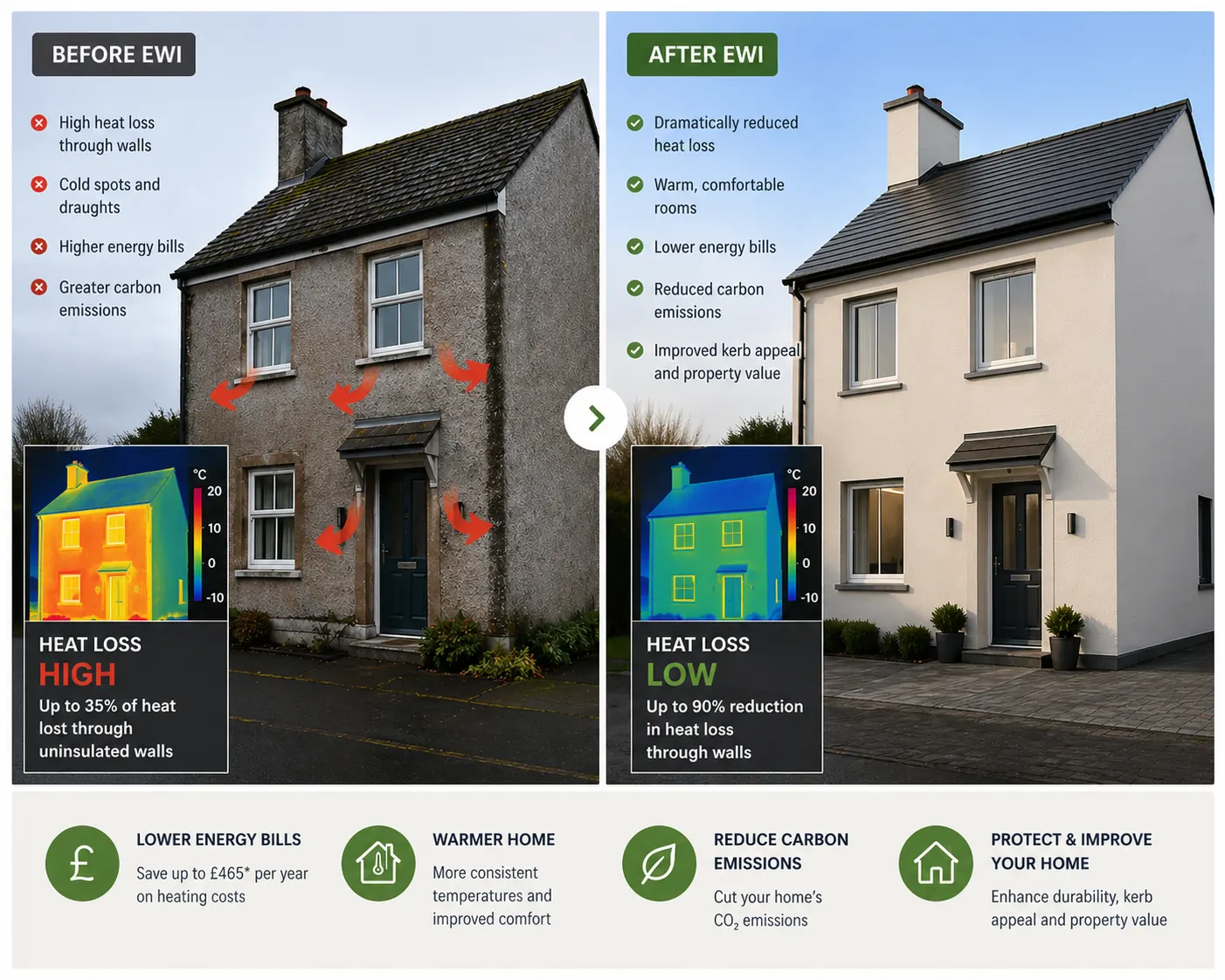
Before and After: The Difference EWI Can Make Before EWI
Many older homes, especially solid wall properties, lose a large amount of heat through their external walls. This can lead to:
- Cold rooms and uneven temperatures
- Higher heating bills
- Draughts and heat escaping quickly
- Condensation on internal wall surfaces
- Tired, cracked or weathered external walls
- Poor kerb appeal
- Difficulty keeping the home warm in winter
- After EWI
After external wall insulation is installed, your home can benefit from:
- Better heat retention
- Lower energy usage and reduced heating costs
- A warmer, more comfortable home
- Reduced draughts
- Reduced risk of condensation on internal wall surfaces
- Improved weather protection
- A fresh, modern exterior finish
- No reduction in internal living space
- Improved sound resistance
- Longer-lasting protection for the existing wall structure
External wall insulation does not just improve performance — it can completely transform the appearance of your property.
Key Benefits of External Wall Insulation
1. Reduce Heat Loss
2. Lower Energy Bills
3. Improve Comfort
4. Improve the Appearance of Your Home
5. Protect Against Weather
6. Reduce Internal Disruption
7. No Loss of Internal Space
8. Help Reduce Condensation Risk
How External Wall Insulation Is Installed
Step 1: Home Survey and Assessment
We assess the property, wall condition, access, existing defects, ventilation needs, roofline, pipework, windows, doors and any areas that may need preparation before installation.
This stage is important because external wall insulation should not be installed over damp, damaged or structurally unsound walls.
Step 2: Preparation Works
- Cleaning the wall surface
- Removing loose or defective render
- Repairing cracks or damaged areas
- Adjusting pipes, cables or external fittings where required
- Installing scaffold for safe access
- Protecting windows, doors and surrounding areas
Step 3: Starter Tracks and Base Profiles
Step 4: Insulation Boards Fixed to the Wall
Insulation boards are applied to the external wall using adhesive and/or mechanical fixings, depending on the system design and wall type.
Common insulation materials include expanded polystyrene and mineral wool. The selected material depends on the property, performance requirements, fire considerations and system specification.
Step 5: Reinforcement Layer
Step 6: Primer and Render Finish
Once the reinforcement layer is ready, primer and render are applied. The final finish can be smooth, textured or decorative, depending on the chosen look.
Step 7: Detailing and Finishing Touches
How Long Does External Wall Insulation Take?
As a general guide:
- Small terraced property: around 1 to 2 weeks
- Semi-detached property: around 2 to 3 weeks
- Detached or larger property: around 3 to 5 weeks or more
Timescales can be affected by:
- Weather conditions
- Scaffold requirements
- Wall repairs or preparation works
- Property size and access
- Render drying and curing times
- Additional works such as roofline, guttering or pipe adjustments
EcoGlow will confirm a realistic programme after surveying the property.
Is External Wall Insulation Right for Your Home?
EWI is commonly suitable for homes with solid walls, hard-to-treat cavity walls or properties where external wall performance needs to be improved.
It may be a strong option if:
- Your home feels cold even when the heating is on
- Your energy bills are high
- Your property has solid walls
- You want to improve the appearance of the outside of your home
- You do not want to lose internal floor space
- You are already planning external works such as rendering, roofline works, gutter repairs or solar installation
Before any installation, EcoGlow will assess the building carefully to make sure the system is appropriate and that moisture, ventilation and wall condition are properly considered.
Things to Consider Before Installing EWI
External wall insulation is a major home improvement, so it must be planned correctly.
Important considerations include:
- Existing damp or structural issues must be resolved first
- Ventilation may need to be assessed because insulation can make the home more airtight
- Planning permission may be required in some cases, especially for listed buildings, conservation areas or properties where the external appearance will change significantly
- Gutters, downpipes, satellite dishes, lights, cables and external fittings may need to be moved or extended
- Roof overhangs and window sill depths may need to be checked
- Scaffold is usually required
EcoGlow will guide you through these requirements during the survey stage.
Frequently Asked Questions
What is external wall insulation?
Will EWI reduce my energy bills?
Will it make my home warmer?
Is the work disruptive?
Will I lose space inside my home?
Can EWI improve the appearance of my property?
Does EWI help with condensation?
Do I need planning permission?
Can EWI be installed in bad weather?
What materials do you use?
Can EWI be installed with other works?
Why Choose EcoGlow
EcoGlow Group Ltd delivers energy efficiency and renewable improvement works across the UK, helping homeowners improve comfort, reduce energy waste and upgrade their properties with confidence.
With experience across insulation, heating, renewables and whole-house retrofit, we understand how external wall insulation fits into the wider performance of the home.
When you choose EcoGlow, you get:
- A professional property assessment
- Clear advice before installation
- High-quality system materials
- Experienced installation teams
- Careful attention to detailing and finish
- A cleaner, warmer and better-protected home
- Book Your Free External Wall Insulation Assessment
Ready to make your home warmer, more efficient and more attractive?
Contact EcoGlow today to arrange a free external wall insulation survey and find out whether EWI is right for your property.